

Jane Constance is known to many as a singer, performer, and public figure. But behind that public journey is another story, one that speaks directly to educators, families, and anyone thinking about what literacy can make possible. It is a story about braille, high expectations, and the power of having the right tools at the right time.
Blind from birth, Jane learned braille at an early age and began using a BrailleNote as a child. Over time, that technology supported her journey from school in Mauritius to university in the United Kingdom and into employment. Today, her experience offers a powerful reminder that braille is not simply a support.
For Jane, braille was never only about access. It was about language itself. She connects braille to spelling, grammar, vocabulary, and the confidence that comes from understanding how words work. That precision mattered in school, in her legal studies, and even in music, where it helped her read lyrics carefully and write her own material.
In a time when audio tools are increasingly powerful, Jane recognizes their value. But for her, braille offered something different: direct control over written language. It strengthened her writing skills, supported her bilingualism, and shaped how she learned from an early age.
With guidance from her mother, a teacher, she developed strong literacy habits through dictation and writing exercises.
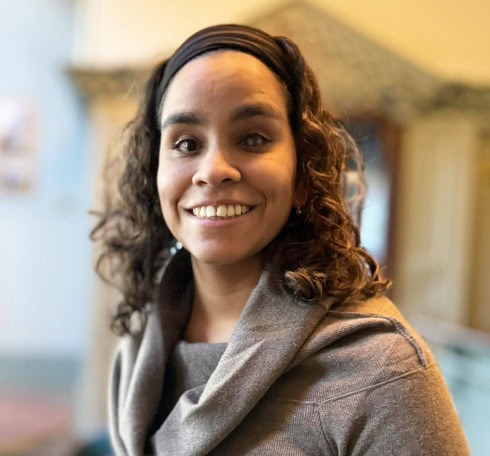
In the classroom, braille technology made participation easier and more natural. Jane recalls that with her HumanWare BrailleNote, she could write in braille and connect the device to a screen so that her teacher could read what she was writing, even if the teacher did not know braille.
That kind of bridge matters. It shows how accessible technology can support inclusion not by separating a student, but by helping them participate more fully in the same learning space as everyone else.
Her journey with BrailleNote technology began with a second-hand BrailleNote mPower. Later, she moved to the BrailleNote Apex and then to the BrailleNote Touch Plus. Looking back, she describes that progression not as a series of product upgrades, but as an expanding set of possibilities.
The mPower opened the door. The Apex made internet access easier. The Touch Plus, she says, was life-changing. With each step, she was better able to adapt to the growing demands of school and later university. She is clear that without those tools, her academic path would not have been the same.
What stands out in Jane’s story is not only achievement, but continuity. Too often, the conversation around accessibility focuses on immediate accommodation rather than long-term development.
Jane’s experience suggests something more. When a student has access to braille literacy early, and when technology evolves with that student over time, the result can be more than academic survival. It can support independence as a habit and organization as a strength.

That became especially clear during her university years in Preston, in the United Kingdom. Jane describes university as the stage when independence is truly tested. There were books to access, research to manage, dissertations to submit, deadlines to meet, and professors to contact.
Braille and braille technology helped her manage all of it. She booked books online, read in braille, carried out research, emailed professors, and stayed ahead of deadlines. In her view, braille helped her remain the organized person she had always been, even under greater pressure and with stricter expectations.
HumanWare also supported her during that period, and Jane speaks about that support with gratitude. At the same time, she widens the conversation beyond her own experience. For her, the issue is not only what one company did for one student. It is the larger problem of access.
Too many blind students and professionals still cannot afford braille devices, even when those devices can change the direction of their education and working lives.
Jane speaks with emotion about friends who did not have the same opportunities and argues that more organizations, funders, and institutions should step in to help close that gap.
That concern about access continues into her reflections on employment. If her school and university story shows what braille made possible in education, her comments on the job market show why those early investments matter later. Jane is now working in human resources, and she speaks very directly about the myths that still shape recruitment.
One of the most persistent, she says, is the idea that someone who uses braille cannot work independently. In her own experience, many recruiters still lack basic knowledge about accessibility, assistive technology, and how blind professionals actually do their jobs.
Her response to that misunderstanding is not abstract. She lives it. In her current role, she works in human resources in a company of 63 people and handles recruitment, interviews, background checks, selection criteria, and absence management. Braille and technology remain part of the way she works every day.
For Jane, the problem is not a lack of ability among blind candidates. It is a lack of imagination and openness among employers who do not yet understand what accessible tools make possible.
Jane’s story challenges any narrow view of braille as old-fashioned or secondary in an age of smart devices and artificial intelligence. In her own life, newer technologies already play an important role.
Yet none of that has replaced braille. Instead, these tools sit alongside it. Jane’s message to educators, parents, employers, and students is both practical and hopeful.
To educators, she says that if they are unsure, they should ask for help, because resources exist. To parents, she emphasizes acceptance, encouragement, and allowing children to explore life fully rather than limiting them through fear. To employers, she urges openness to change and a willingness to recognize talent.
To students, she offers a message of perseverance: do not give up, do not listen to negative voices, and keep fighting for your goals.
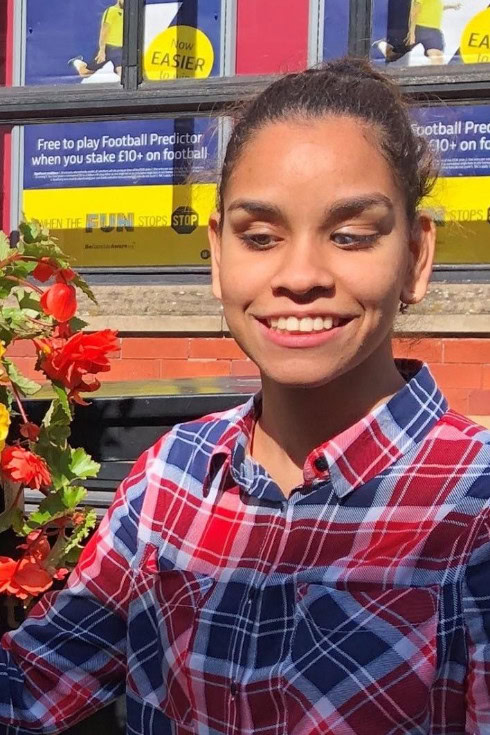
For educators, that may be the central lesson of Jane Constance’s journey. Braille is not only a method. It is not only a device output. In the right conditions, it can be part of a much larger story, one that begins in the classroom but reaches far beyond it, into university, employment, creativity, and the freedom to build a life on one’s own.
Learn more about BrailleNote evolve and how it supports greater accessibility, independence, and opportunity.