

Vision loss often becomes real in ordinary moments. A page becomes harder to read. A familiar step feels less safe. A routine task begins to take more energy than it used to.
At first, the focus is often practical: how to keep reading, working, cooking, moving around, using technology, or staying independent. These questions matter because they shape daily life. But behind them, there are often quieter questions that are just as important.
Who am I becoming?
Will people still see me the same way?
How much of my independence will I lose?
For some people, vision changes happen gradually. For others, they arrive suddenly or progress more quickly. In both cases, the emotional impact can be difficult to name.
A person may be adapting on the outside while feeling overwhelmed on the inside. They may continue showing up at work, school, or family responsibilities while carrying fear, grief, or exhaustion that others do not see.
This is why mental health must be part of the conversation from the beginning.
The connection is not only personal but also supported by research. The US Centers for Disease Control and Prevention (CDC) reports that vision loss is linked to loneliness, anxiety, and depression, and that:
1 in 4 adults with vision loss experiences anxiety or depression. Younger adults face an even higher risk.
This matters because vision loss often occurs during key life stages: building a career, raising a family, or pursuing education.
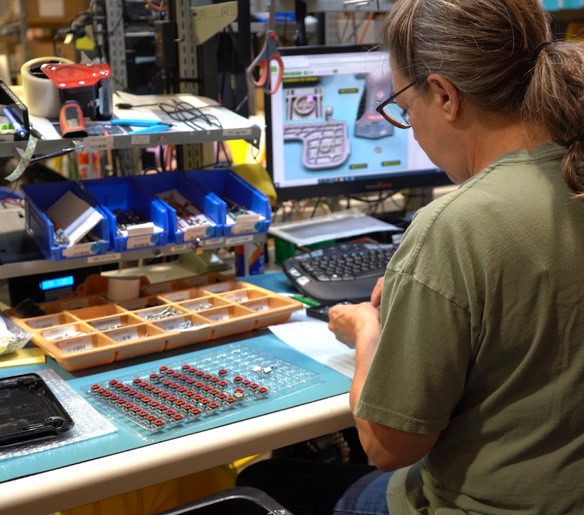
For people in the workforce, vision loss creates both practical and emotional challenges. There may be concerns about disclosure, accessibility, performance, or how colleagues will react. At the same time, individuals may be grieving the confidence or independence they once had.
Vision loss is not just about learning new ways to work—it’s also about rebuilding confidence in a professional identity.
For older adults, the impact can be different but equally significant. Vision loss can affect routines, hobbies, mobility, reading, driving, social life, and the ability to participate in familiar activities.
The World Health Organization notes that adults with vision impairment can experience lower rates of employment and higher rates of depression and anxiety. It also notes that, for older adults, vision impairment can contribute to social isolation, difficulty walking, a higher risk of falls and fractures, and a greater likelihood of entering nursing or care homes earlier.
For older adults, the conversation around vision loss should also include cognitive health. Many daily activities—reading, recognizing faces, moving safely, managing medication, preparing meals, paying bills, and staying socially active—depend on access to visual information.
As vision changes, these routines can become more difficult, and over time, a person may withdraw from activities that once kept them active and engaged. Research highlights a link between vision impairment and cognitive decline:
…untreated vision loss as a potentially modifiable risk factor for dementia

This does not mean vision loss causes dementia in every case. Rather, it underscores an important point: vision, mental health, and brain health are deeply interconnected and should not be addressed in isolation, especially for older adults.
This point matters for families, caregivers, rehabilitation professionals, and health care providers. When an older adult is losing vision, support should go beyond managing reduced sight; it should help them stay active, connected, confident, and engaged in daily life.
This may include vision rehabilitation, assistive technology, emotional support, and community connection, while also recognizing changes in memory, mood, and participation.
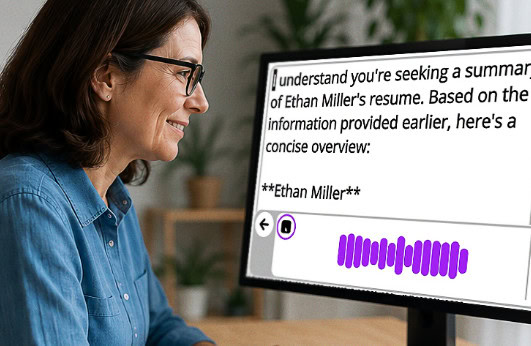
Assistive technology plays a key role in this process. Solutions developed by HumanWare help people access information, complete tasks more independently, and stay engaged at work and in everyday life—supporting both function and well-being. When someone regains the ability to read, navigate, or complete daily tasks, the impact goes beyond function. It can restore confidence, reduce isolation, and help them feel more in control.


Vision rehabilitation further connects practical support with emotional health. As highlighted by the National Eye Institute, it can include job training, assistive tools like magnifiers and screen readers, daily living skills, counseling, and transportation; helping individuals maintain independence. When these supports come together, they can reshape how a person sees themselves—not just what they can do.
Practical tools are essential, but they are not the whole answer. People also need language and space to process the emotional side of vision loss. Fear, sadness, anger, or uncertainty are not failures; they are part of the experience.
Meaningful support recognizes the specific realities of living with vision loss, offering guidance that reflects accessibility, independence, identity, and community—not generic advice.
During Mental Health Awareness Month 2026, the Foundation is leading a campaign called “See the Whole You,” highlighting the importance of addressing emotional well-being alongside medical care.
Together, these efforts reinforce a simple message: no one should have to navigate the emotional side of vision loss alone.
For professionals, families, and caregivers, this is a reminder: supporting vision loss means supporting the whole person. A referral to a device, service, or accommodation can be life-changing, but so can a conversation that makes room for what someone is feeling, not just what they need to do.

Vision loss affects more than sight. It can change how people feel, connect, work, move, age, and imagine the future. That is why mental health belongs at the center of the conversation.
Technology alone is not the solution. But when combined with emotional support, rehabilitation, and community, it becomes a powerful part of helping people stay independent, connected, and confident and continue doing what matters most.