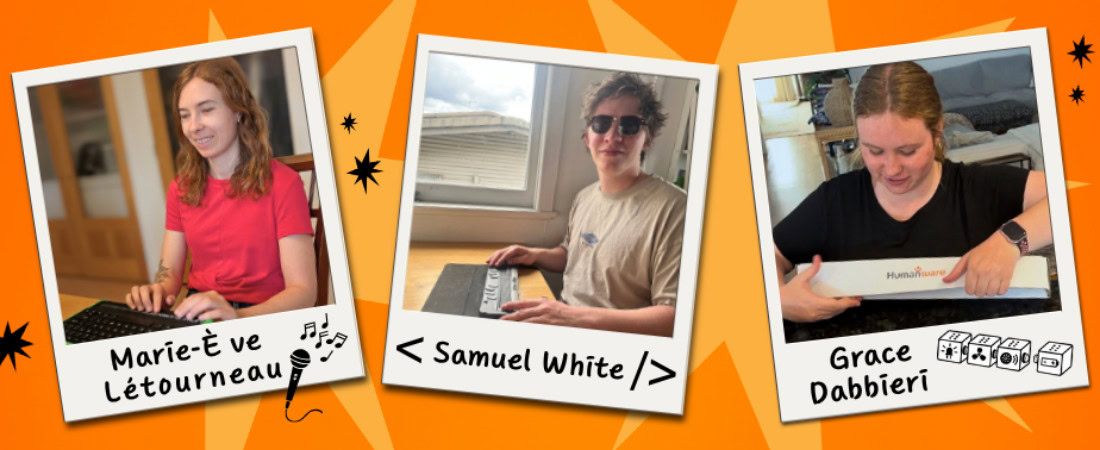
Karaoke with friends. Video games. Hands-on science. For these young innovators, accessibility goes beyond reading, mobility and everyday tasks. It means being able to learn, create, play and participate fully.
Last spring, HumanWare launched the 2026 Jim Halliday STEAM Innovation Bursary to recognize young people who are blind or have low vision and are using science, technology, engineering, arts and mathematics to create a more accessible world.
With support from advocates and creators, including Anthony S. Ferraro, who shared the opportunity with his online community, the bursary reached students across Canada, the United States, Australia and India.
Their projects tackled accessibility in education, gaming, sports, technology and community life. The ideas ranged from affordable 3D-printed braille signage and accessible software to tactile electronics and new ways for blind students to participate in STEM.
What stood out was the thinking behind these ideas. Rather than simply improving existing accessibility tools, these young innovators asked a bigger question:
From this inspiring group, Marie-Ève Létourneau, Samuel White and Grace Dabbieri were selected as the 2026 bursary recipients.
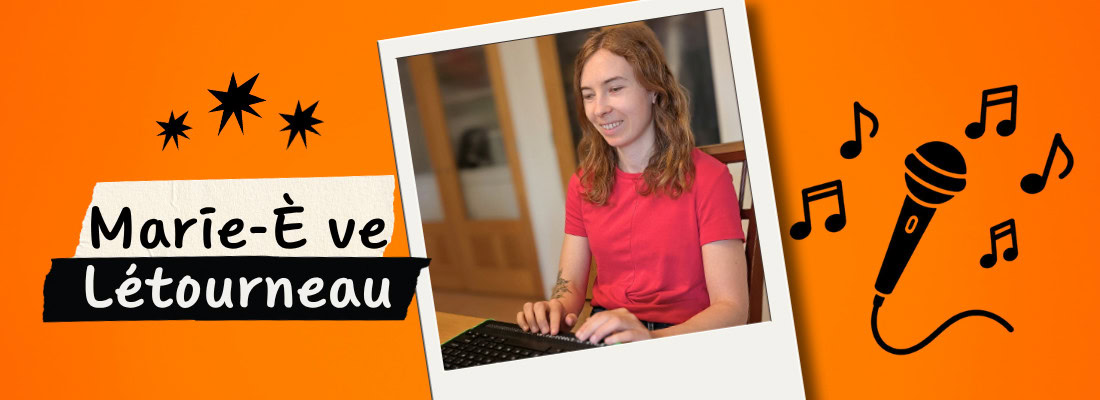
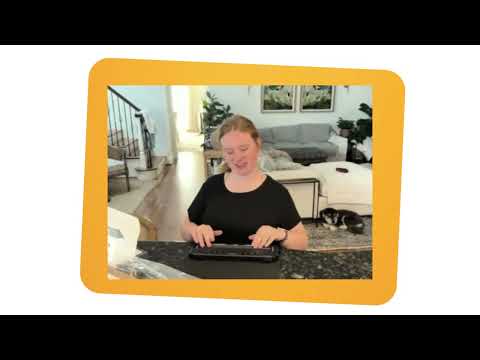
Marie-Ève Létourneau loves karaoke. She loves the music, the laughter and the energy of everyone singing together. But karaoke depends on lyrics scrolling across a screen, leaving someone who cannot see it unable to participate in the same way.
Marie-Ève decided that should not be accepted as inevitable.
She collaborated with developers to create Braille Karaoke, a web application that synchronizes song lyrics with a braille display in real time. As the music plays, a blind user can follow the lyrics with their fingertips and sing alongside everyone else.
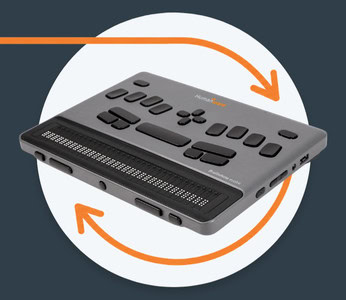
The application works through a browser and is compatible with the Mantis Q40 and screen readers such as NVDA and JAWS. It requires no specialized installation or advanced technical knowledge.
What makes Braille Karaoke especially creative is the experience it makes accessible. It is not about completing an assignment or performing a work task. It is about friendship, music and being part of a shared moment.
People who are blind should not have access only to the practical parts of life. They should also be able to join the song, laugh when someone misses a lyric and enjoy karaoke without having to memorize every word in advance.
Marie-Ève, a doctoral student in psychology at the Université du Québec à Trois-Rivières, has already developed Braille Karaoke into a working application. Her goal is to refine it and make it available to more people in the blind community.
Most applications are designed visually first. Screen readers can interpret the resulting interface, but users may still have to navigate menus, visual structures and irrelevant information before reaching the function they need.
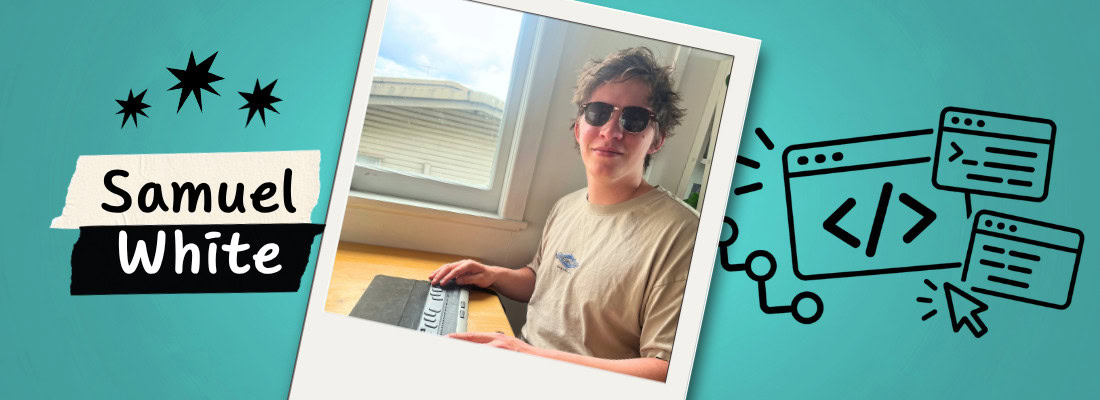
Samuel White is asking a more fundamental question: why should a blind user have to navigate software as though they were looking at a screen?
Samuel, a Bachelor of Information Technology student at Queensland University of Technology in Australia, is developing Touch, an accessible software infrastructure designed to provide more direct access to an application’s information and capabilities.
Instead of recreating a visual interface through speech, Touch aims to let users interact with what the application actually does. A developer could expose the application’s functions to Touch, which would then manage the accessible interaction layer.
Touch currently runs on macOS, and Samuel uses it in his daily work as a blind software developer, including to help develop Touch itself. His next goals include bringing it to Windows, adding touchscreen interaction and exploring connections with braille hardware.
The creativity of Touch lies in the scale of Samuel’s thinking. He is not trying to repair one inaccessible button or redesign one application. He is challenging the assumption that digital access must always begin with a visual screen.
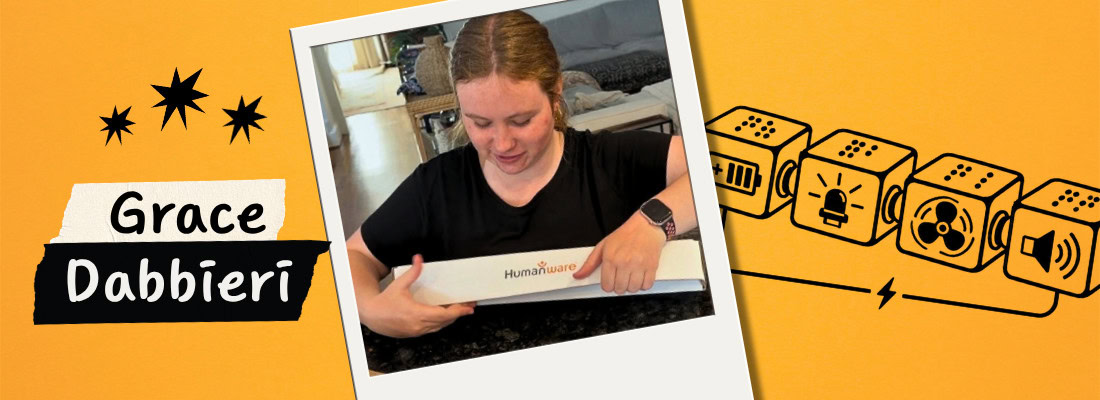
Grace Dabbieri has been blind since birth. From a young age, she noticed that many STEM activities were not built with blind students in mind. Electronics kits depended on matching coloured wires, following printed diagrams or using visual simulations.
During a circuitry workshop offered through the Braille Institute and the University of San Diego, Grace explained why the activity was inaccessible. Her feedback was heard, and she was invited to help create the solution.
Through STEAM Unseen, an initiative connected to the University of San Diego’s Engineering Exchange for Social Justice, Grace collaborated with engineering students and Braille Institute affiliates to redesign the experience from the ground up.
The team created tactile circuit cubes containing real components such as an LED, motor, buzzer and battery terminal. The cubes connect magnetically, with the magnets positioned so they can attach only in the correct orientation. Each component is identified with braille and large-print labels.
Instead of following a sighted person’s instructions, a blind student can independently identify the components, connect them and physically understand how a circuit comes together.
The designs can be 3D-printed or laser-cut so other schools and organizations can reproduce them at a relatively low cost. The team also plans to develop accessible lessons covering concepts such as voltage, polarity, and parallel and series circuits.
Grace’s project does more than adapt an existing science lesson. It gives blind students the freedom to experiment, make discoveries and experience the satisfaction of building something themselves.
Now preparing to study cybersecurity, Grace also represents something important to younger blind students: someone with their lived experience helping design and teach the technology, not being consulted only after the work is finished.
Braille Karaoke, Touch and STEAM Unseen address very different experiences, but they all reject the same limitation.Braille Karaoke, Touch and STEAM Unseen address very different experiences, but they all reject the same limitation.
Accessibility should not stop at helping someone complete essential tasks. It should create access to curiosity, entertainment, creativity, experimentation and joy.
Marie-Ève wants blind people to sing with their friends. Samuel wants them to interact with software on their own terms. Grace wants blind students to build, test and discover scientific concepts independently.
These young innovators are not waiting for someone else to decide which experiences should be accessible. They are creating the experiences they want to have and opening them to others.
Congratulations to Marie-Ève Létourneau, Samuel White and Grace Dabbieri, the 2026 HumanWare Jim Halliday STEAM Innovation Bursary recipients, and to every student who challenged us to imagine accessibility beyond the expected.