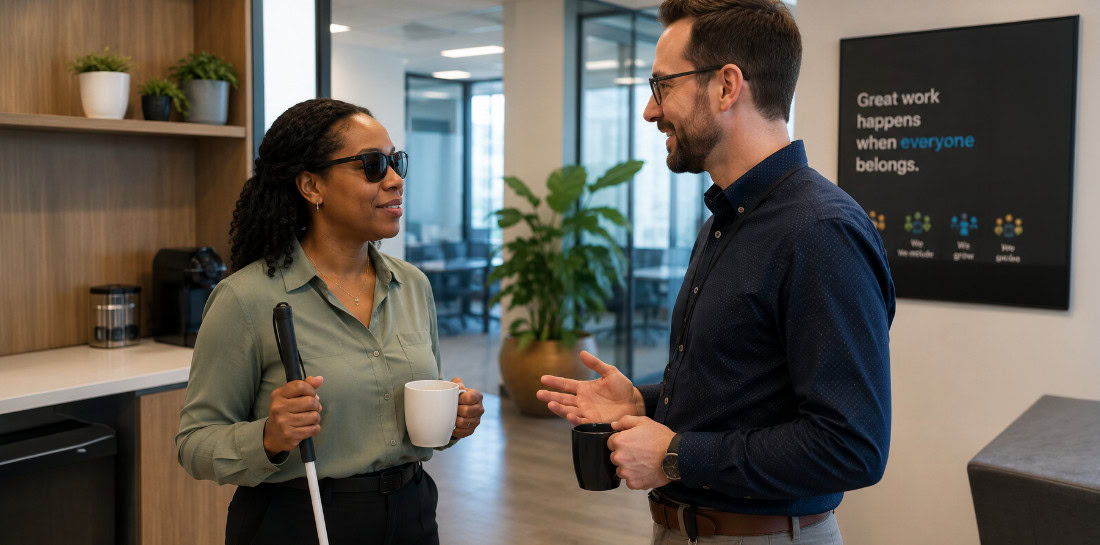


For employers and DEI leaders, disability inclusion cannot stop at good intentions. It has to show up in recruitment, onboarding, technology, workplace culture, career development, and the everyday systems employees are expected to use.
People who are blind or low vision work across technology, hospitality, education, customer service, government, accessibility, media, sales, and many other fields. Yet employment barriers remain significant. In the UK, RNIB reports that the employment rate is 76% in the general population, 51% among disabled people excluding sight loss, and just 27% among people registered blind or partially sighted. RNIB also identifies inaccessible recruitment processes, poor employer attitudes, and inadequate workplace support as the most common barriers to work.
These barriers are not about ability. They are about access.
The World Health Organization estimates that at least 2.2 billion people globally have near or distance vision impairment, and notes that adults with vision impairment experience lower rates of employment as a result. WHO also estimates the annual global productivity loss linked to vision impairment at approximately US$411 billion. For employers, accessibility is both a human priority and a workforce priority.
Inclusive employment starts before the interview. A candidate who is blind or low vision may first encounter an employer through a job posting, an online application form, a PDF, a screening test, an interview platform, or an assessment process. If those tools are not accessible, qualified candidates may be excluded before they ever have the chance to show what they can do.
The American Foundation for the Blind’s (AFB) Workplace Technology Study found that participants frequently faced accessibility challenges during hiring and onboarding, including automated tests, paper onboarding forms, and electronic onboarding forms. The AFB recommends that employers make HR materials, websites, applications, automated screening systems, forms, manuals, electronic documents, training materials, and paper materials accessible to people who use assistive technology.
“When hiring tools are not accessible, talent is lost before employers even get to meet it.”
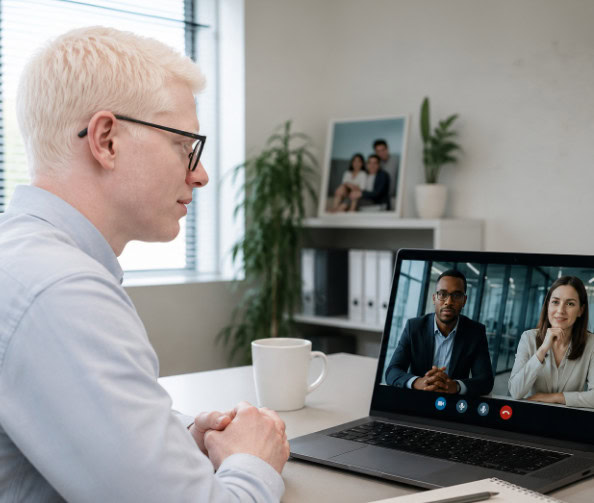
This matters for people who are blind, and it matters equally for people who are low vision. Low vision is not one single experience. Some people need magnification. Some need high contrast. Some need large print, reduced glare, better lighting, enlarged monitors, OCR, speech output, or a combination of tools, and those needs may shift depending on the task, the environment, and how their vision changes over time.
RNIB lists workplace adjustment examples that include large screen monitors, magnification software, accessible work systems, building modifications, flexible hours, training, retraining, and time off for assessment, treatment, or rehabilitation.
The See Things Differently podcast gives these points a human voice. In episode 14, Joe Steinkamp speaks from direct experience with progressive vision loss, glaucoma, cataracts, assistive technology, and employment. He worked in radio and retail before moving into government service, and later joined what was then the Texas Commission for the Blind as an employment assistant specialist, helping people maintain and obtain employment. He describes that work as deeply rewarding because it helped people keep jobs or find new ones.
Joe’s story is especially relevant for employers because it shows how low vision, work, and technology intersect in real careers. He describes adapting as his vision changed over time and drawing on his long experience with assistive technology as a professional strength. His testimony challenges the assumption that vision loss means reduced capability. In reality, many employees who are blind or low vision develop strong problem-solving and adaptive skills precisely because they have learned to navigate tools, workflows, and environments that were not designed with them in mind.
That adaptability is one of the most important lessons for employers. A successful accommodation is rarely one device or one setting. For a low vision employee, it may mean a larger monitor, magnification software, a document camera, accessible color contrast, adjustable lighting, large print materials, or the ability to customize display settings. HumanWare’s Prodigi is designed specifically for this kind of workplace need, integrating magnification, text-to-speech, and document access in a flexible system that can support reading, writing, and productivity throughout the workday. For employees who prefer a portable option, the explorē line of handheld magnifiers offers high-definition magnification that travels with the user across different work environments and tasks.
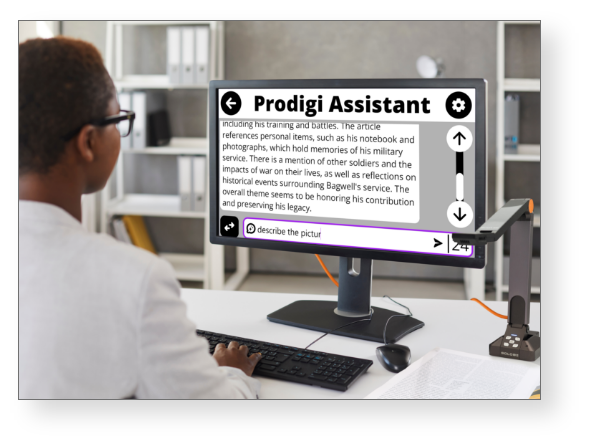
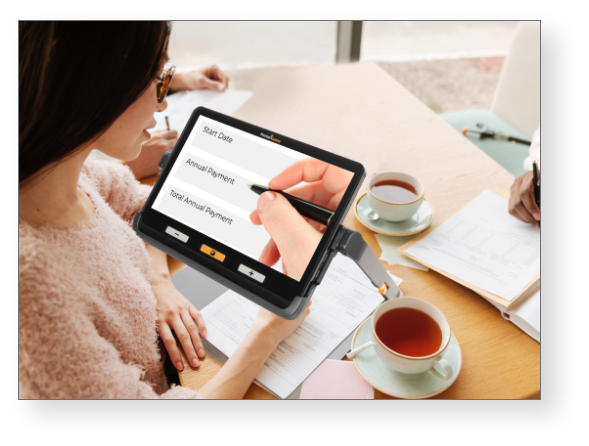
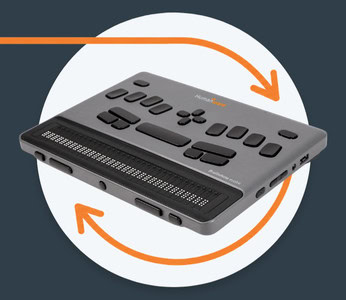
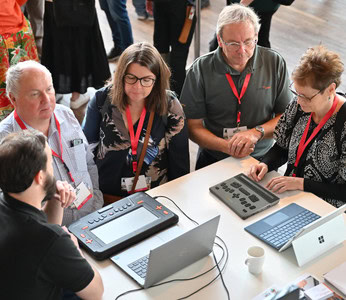
For another employee, the right tools may look entirely different: a screen reader, Braille display, audio output, tactile labels, or accessible documents. HumanWare’s Brailliant braille displays and BrailleNote evolve support Braille-based reading and writing alongside mainstream tools like Microsoft 365, while the Victor Reader Stream gives users who are blind access to books, documents, and audio content with a fully tactile interface. Some employees may shift between visual and non-visual tools during the day depending on fatigue, lighting, screen content, or the task in front of them.
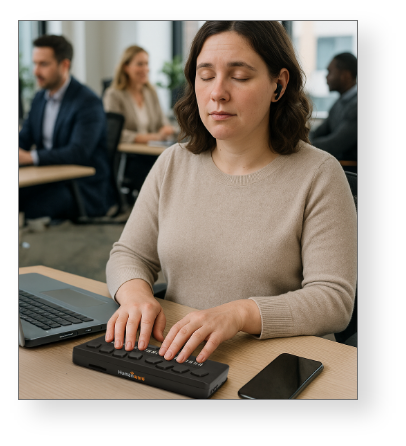
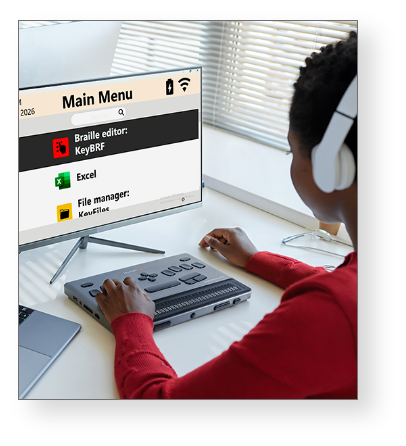
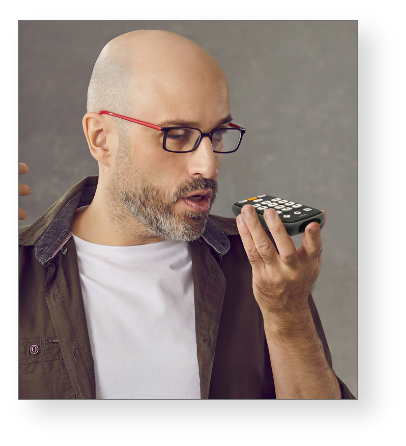
The AFB Workplace Technology Study reinforces this point. Participants reported using multiple types of software to do their jobs and encountered accessibility challenges with mainstream workplace tools, particularly video conferencing, instant messaging, and documents created by sighted colleagues that were not properly formatted for accessibility. For DEI leaders, this means accessibility cannot sit only with HR. It must extend to IT, procurement, managers, communications teams, training teams, and anyone choosing the tools employees are expected to use.
Dave Wilkinson’s testimony from episode 15 shows how accessible design can shape professional opportunity in unexpected ways. Dave, now a senior digital accessibility analyst for Hilton, explains that while travelling he noticed Hilton properties often had treadmills with tactile buttons, a detail that allowed him to use the equipment independently. Years later, a conversation about that experience led directly to his current role. As Dave puts it, “I got into a field that I knew nothing about as a direct result of tactile buttons on treadmills.”
For employers, this is a powerful reminder that accessibility is not only about compliance. It builds trust. It influences where people choose to work, travel, shop, and build relationships. And it helps organizations recognize talent they might otherwise miss. A small accessibility feature can communicate something much larger: that people who are blind or low vision were considered from the beginning.
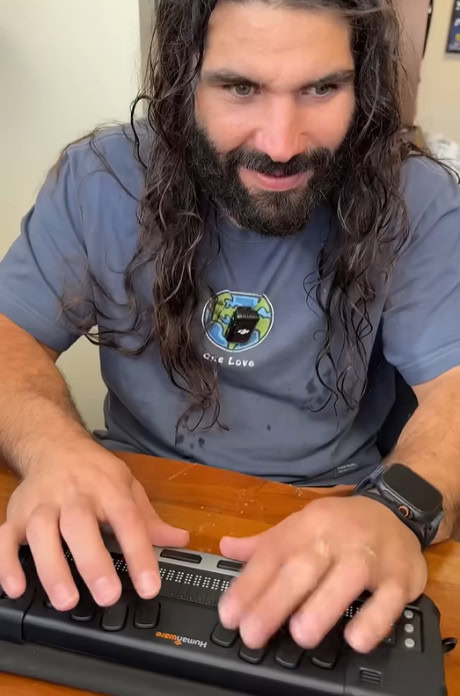
Braille also remains part of the employment conversation, though it should not be the only focus. In another See Things Differently episode, Anthony Ferraro states plainly, “Braille isn’t a privilege. It’s a right.“
His testimony matters because literacy supports independence, education, communication, and long-term employment. At the same time, not every person who is blind or low vision uses Braille.
Some use large print, magnification, speech, audio, OCR, accessible mobile apps, or other tools. An inclusive employer understands that accessibility must be personalized.
American Printing House for the Blind connects accessible technology, Braille, large type, digital magnification, and other solutions to lifelong employment, productivity, and independence, providing materials, support services, and specialized technology for people who are blind and low vision.
The business case is clear. A report from the International Labour Organization and the International Agency for the Prevention of Blindness, also highlighted by the World Health Organization, found that workers with vision impairment are 30% less likely to be employed than workers without vision impairment. The same source emphasizes that healthy vision is connected to safety and productivity at work, and that workplace initiatives should include workers with naturally occurring sight loss in risk assessments and support systems.
For employers, the practical path forward begins with the full employee journey. Recruitment should be accessible. Interviews should include clear accommodation options. Onboarding should work with assistive technology. Training should be available in accessible formats. Workplace platforms should be tested with screen readers, magnification, keyboard navigation, zoom, contrast settings, and reflow. Managers should know how to discuss accommodations respectfully. IT teams should understand that assistive technology is part of workplace infrastructure, not an exception to it.
Most importantly: ask the employee what works for them. Some people with low vision prefer enlarged text and high contrast. Others rely more on speech output. Some people who are blind use Braille; others do not. Some employees will need their accommodations to evolve as their vision changes. A good accommodation process is flexible enough to grow with the person.
Inclusion is not about lowering expectations. It is about removing the barriers that prevent people from meeting them. The testimonies from See Things Differently show that people who are blind or low vision are already building careers, solving problems, mentoring others, shaping accessibility, and contributing across industries. The role of employers is to make sure their workplaces are ready to recognize that talent, support it, and let it grow.